


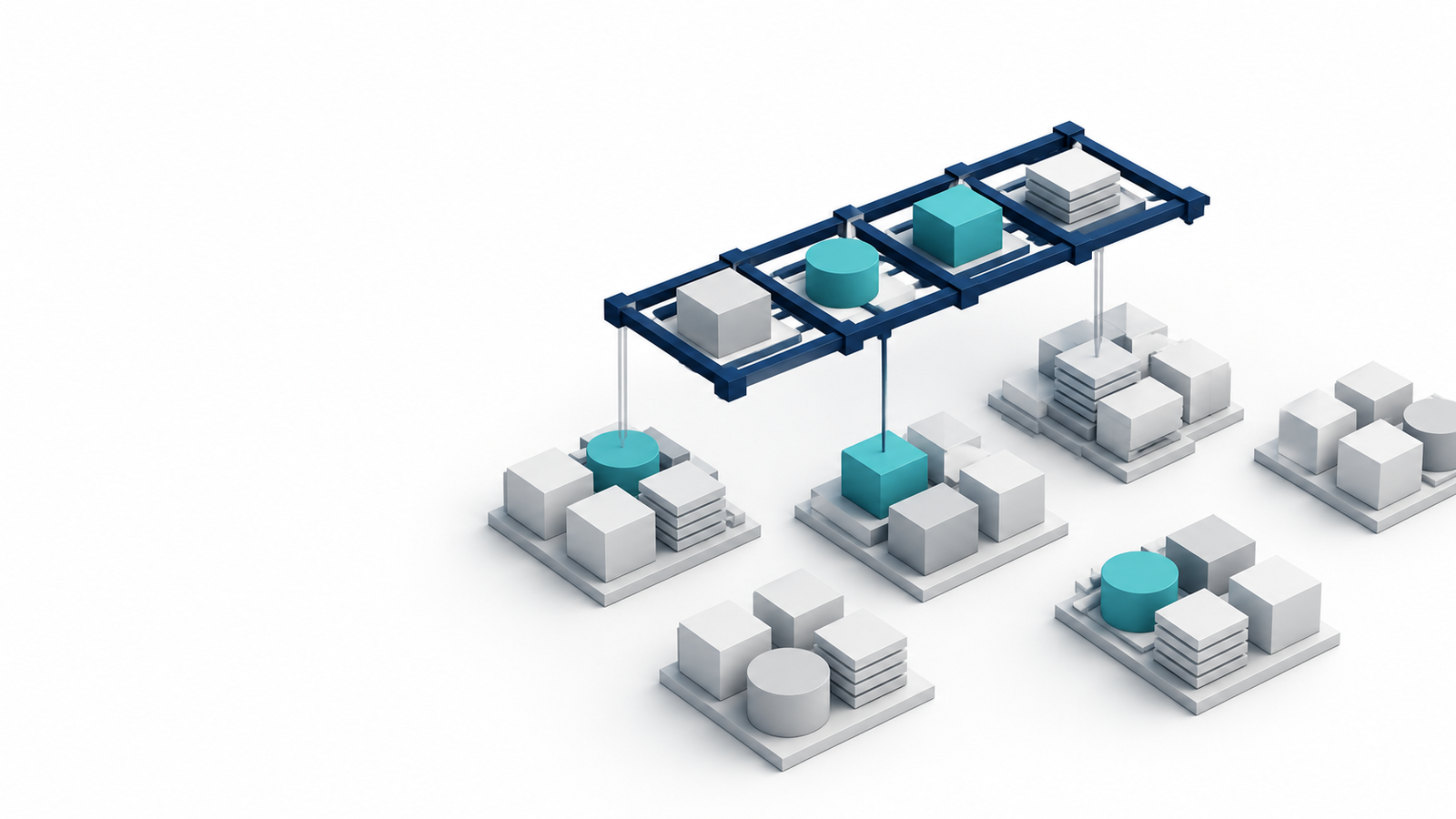
Global Power Platform automation governance Through a Central Operating Model
Executive Summary
Power Platform automation governance addressed duplication among independent automation initiatives at an enterprise manufacturer. The organisation operated across regions and functions, with separate initiatives creating overlapping automation work. The engagement delivered enterprise automation governance and CoE operating-model work, introducing a centralised automation operating model. Governance requirements covered automation standards, a solution review process and reuse governance. The supplied outcome indicates increased governance and reuse. The case illustrates how enterprise adoption can require a shared operating model to connect distributed automation activity.
Client Context
The client was an enterprise manufacturer with a global operating context. Its automation initiatives operated independently across regions and functions. This account retains that organisational pattern while generalising detailed scale information to protect confidentiality.
The central issue concerned the relationship between initiatives. Individual automation activity existed across the organisation, but independent development caused duplication. The engagement therefore focused on enterprise governance and the CoE operating model rather than an isolated application requirement.
Platform adoption formed the engagement’s core signal. This describes the context for the work; it does not establish an adoption growth rate or a change in user behaviour.
Enterprise Scale Snapshot
| Dimension | Anonymised Scope |
|---|---|
| Countries covered | Multiple countries |
| Business units | Multiple business units |
| Business processes | Multiple business processes |
| User groups | Multiple user groups |
| Active users | Thousands of active users |
These dimensions describe the distributed setting for the engagement. They do not establish which countries, functions or processes experienced the greatest duplication. The case makes no comparison between business units.
Business Challenge in Power Platform automation governance
Independent automation initiatives caused duplication. Regional and functional activity formed part of that challenge. The supported issue was overlapping development, rather than a documented failure of any particular platform component.
The case does not attribute the duplication to poor technical skills, inadequate staffing or a specific approval failure. Those explanations would require separate evidence. It supports a narrower conclusion: independent initiatives created an enterprise coordination problem that the engagement addressed through governance and operating-model work.
For leaders reviewing a similar situation, this distinction matters. A local development question concerns how to meet a particular need. An enterprise governance question concerns how that work relates to other initiatives and shared standards.
Structural Constraint
The supplied constraint was the independence of automation initiatives and the resulting duplication. The record does not identify a missing role, an absent committee or a particular decision owner.
The governance requirements nevertheless define the relevant control areas: automation standards, solution review and reuse governance. These areas frame the intervention without implying that the engagement implemented a specific approval hierarchy or ownership structure.
Enterprise Delivery Approach
The engagement delivered enterprise automation governance and CoE operating-model work. It introduced a centralised automation operating model to address the distributed pattern of independent initiatives.
The available evidence supports this level of delivery description. It does not establish implementation phases, workshops, migration activity or a detailed catalogue of deliverables. The case therefore describes the completed operating-model change without adding a delivery method.
Power Platform automation governance provided the organising focus for this work. The response connected the duplication challenge with the organisation’s stated requirements for standards, solution review and reuse.
Platform Capabilities Enabled
The platform scope included Power Apps, Power Automate, Dataverse and Power BI. These components formed the technology context for the enterprise automation engagement.
The documented change concerned governance across that context. The evidence does not specify application designs, flow patterns, data structures or reporting outputs. It also does not support claims about individual product features or component-level performance.
Power Platform automation governance and Control Model
The following diagnostic model derives from the engagement’s stated requirements. It provides reusable review questions for leaders; it does not claim that the client implemented each evidence requirement or decision record.
| Control Point | Diagnostic Question | Evidence to Seek |
|---|---|---|
| Automation standards | Which shared standards apply to an initiative? | A documented basis for assessing alignment. |
| Solution review | How does review examine potential duplication? | A review record explaining the assessment. |
| Reuse governance | What supports a reuse or separate-development decision? | A documented rationale for the selected approach. |
For organisations applying this model, each question should connect to a clear responsibility. Microsoft Learn’s guidance on defining Power Platform roles and responsibilities supports that general principle. It does not substantiate the client’s delivery work or outcomes.
The model separates three related concerns. Standards define expectations. Review examines a proposed solution. Reuse governance addresses the relationship between new work and existing capability.
Operational Changes
The implemented change was a centralised automation operating model. This changed the operating approach described in the engagement from independent initiatives towards centralised governance.
The evidence does not establish that all development moved to a central team. Centralisation of the operating model should therefore not imply a particular staffing arrangement, organisational restructuring or transfer of every local decision.
Power Platform automation governance describes the coordination focus of the change. The case does not claim that the organisation removed all duplication or secured permanent adherence to standards.
Outcomes Achieved
The supplied outcome indicates increased governance and reuse. This supports a qualitative account of the engagement’s result.
The available measurement context does not support publication of a quantitative reduction claim. This account therefore makes no percentage claim and draws no financial or productivity conclusion.
Leaders should distinguish the implemented model from its reported effects. Introducing a central operating model describes an operational change. Increased governance and reuse describe the supplied outcome. Neither statement establishes long-term durability or sole causation.
Enterprise Lesson
The engagement’s lesson is that automation at scale becomes a governance challenge before it becomes a technology challenge. This is a useful observation for distributed automation settings, rather than a universal sequence for every organisation.
A practical leadership response is to examine how standards, review and reuse connect independent activity. That examination can clarify the operating question before leaders commission further development. It remains a recommendation derived from the case.
PowerFy Service Alignment
The engagement aligns with the CoE Scale & Operating Model Review. The aligned work concerns enterprise automation governance and the relationship between distributed initiatives and a central operating model. The enterprise decision concerns how to organise shared standards, solution review and reuse governance. In this engagement, the documented practical output was the introduction of a centralised automation operating model.
About PowerFy
PowerFy is an enterprise Power Platform transformation partner. We help organisations stabilise delivery backlogs, establish enforceable governance, prepare operating environments for Copilot and scale Power Platform delivery across distributed teams.