


Power Platform environment sprawl needs ownership decisions
Executive Observation
Power Platform environment sprawl can leave an enterprise with visible platform activity but unclear rights to change what exists. In a multi-region manufacturing rollout, governance fatigue calls for scrutiny of ownership as well as environment count. Legacy dependencies can constrain consolidation even when leaders want simpler boundaries. The central decision concerns who accepts responsibility for each environment and the work that still depends on it.
Observed Delivery Pattern
Power Platform environment sprawl and ownership boundaries
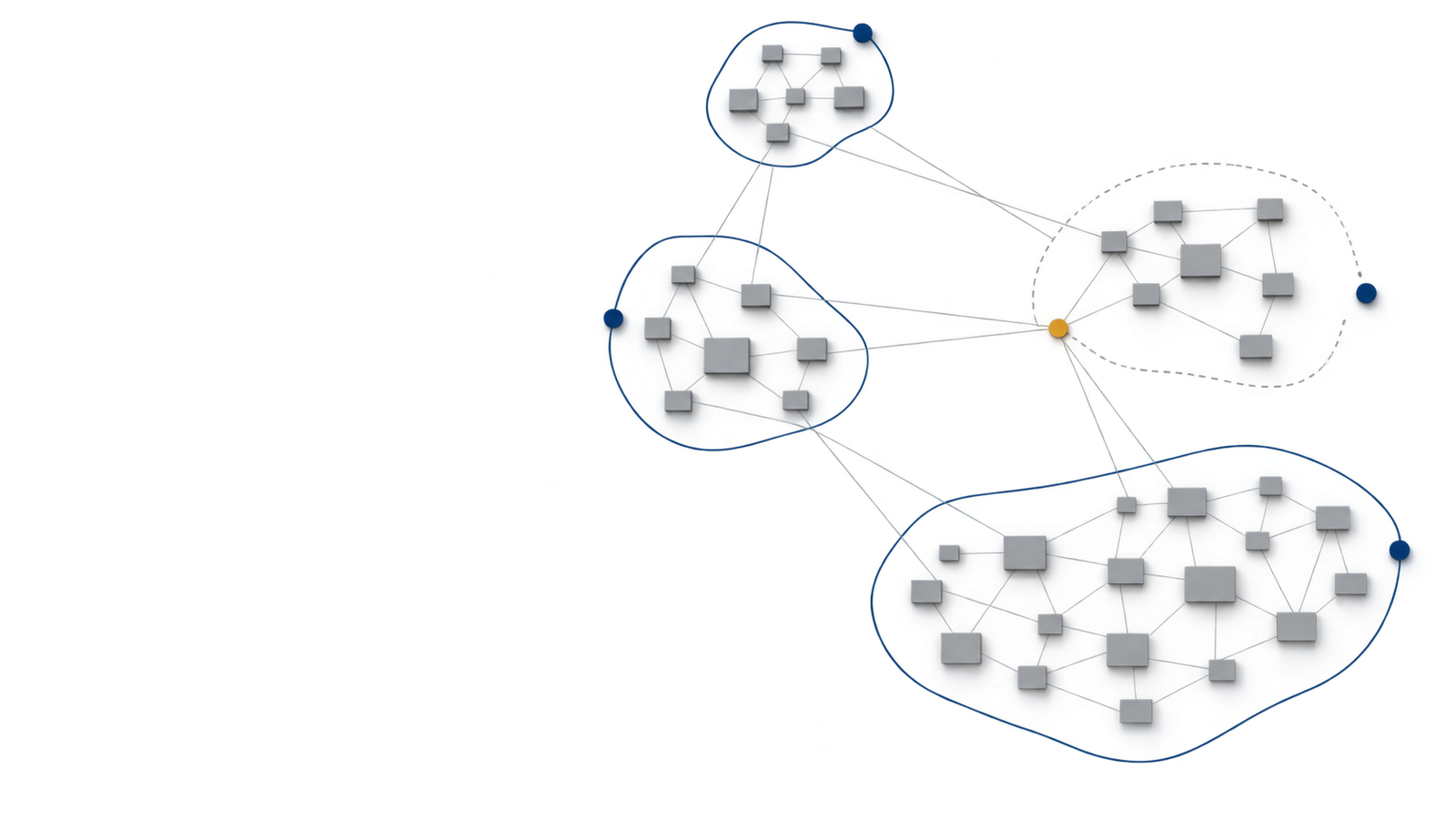
The delivery signal combines environment sprawl, governance fatigue and legacy dependencies across a multi-region manufacturing rollout. Environment rationalization and an ownership reset define the work under discussion. Clear ownership boundaries provide a qualitative operating direction, without establishing savings, speed or any measured change.
Across such a portfolio, leaders should examine where dependency questions prevent teams from making a clear disposition decision. A team may know an environment’s purpose yet lack authority to approve changes affecting another owner. Repeated referrals between teams would indicate an unresolved boundary worth investigating, rather than proving a lack of effort.
Why Existing Controls Miss It
An inventory, where available, can identify environments without establishing who can authorize their consolidation or retirement. Similarly, standards can define expected practice without settling responsibility for a legacy dependency that crosses ownership boundaries. These controls serve useful purposes, but leaders should test whether they support an actual decision.
Microsoft’s Power Platform governance guidance includes designated administration and an environment strategy covering creation, management and decommissioning. :contentReference[oaicite:0]{index=0} Those principles provide general context for this pattern. The enterprise still needs to assign the decision rights for its own dependency constraints.
Therefore, a completed review should identify a decision owner and the next required action. A record of discussion alone cannot establish who accepts the remaining exposure.
Structural Constraint
Legacy dependencies constrain the available choices: retain an environment, consolidate its workloads, or retire it after validating dependencies. Power Platform environment sprawl requires a distinction between environment accountability and responsibility for each dependent workload. One named administrator does not necessarily hold both responsibilities or the authority to resolve a dispute.
Leadership should name an environment owner, require dependent workload owners to validate impacts, and assign unresolved decisions to a portfolio owner. Where teams lack dependency evidence, the owner should record that gap explicitly. A temporary retention decision should include a reason, an accountable owner and a review date.
Operational and Financial Consequences
Unclear boundaries may consume delivery capacity through repeated analysis, handoffs and requests for approval across teams. Support teams may also spend time finding someone who can accept responsibility for a disputed change. These are plausible exposures that the enterprise should measure before assigning a financial value.
However, consolidation also requires effort and may disrupt dependent workloads if teams overlook how they operate. Leaders should compare the cost of retaining an environment with the work needed to change it safely. Relevant estimates include support effort, dependency discovery, validation and transition work, using the enterprise’s actual cost records.
Environment count alone cannot demonstrate value. A retained environment with accepted ownership may support a sound decision, while an unvalidated retirement may create further work.
Required Enterprise Control
Use a dependency-led disposition review for each environment under consideration. The following model recommends decisions and evidence; it does not describe controls already in place. For Power Platform environment sprawl, the review should end with an accountable disposition or an explicit evidence gap.
| Decision | Required evidence | Accountable owner | Decision record |
|---|---|---|---|
| Confirm ownership | Environment purpose, dependent workloads and acceptance from named owners. | Portfolio owner | Environment owner and workload responsibilities. |
| Retain | Documented need and dependencies that justify continued operation. | Environment owner | Retention reason and next review date. |
| Consolidate | Dependency assessment, receiving owner’s acceptance and a validation plan. | Portfolio owner | Approved scope and named transition owner. |
| Retire | Workload owners’ confirmation that dependencies no longer require the environment. | Environment owner | Retirement authorization and supporting evidence. |
| Defer pending evidence | Unresolved dependency, evidence needed and reason to defer. | Portfolio owner | Temporary exception, action owner and review date. |
The CoE should maintain the decision record and bring unresolved boundaries to the portfolio owner. A proposed owner should explicitly accept responsibility before the review treats ownership as settled. Where a decision requires transition work, leadership should confirm the responsible team and funding before authorizing execution.
Signals Leadership Should Monitor
Use these recommended measures to assess Power Platform environment sprawl. Establish a baseline before setting thresholds, and apply a consistent portfolio scope across reporting periods.
- Ownership coverage: Environments with an accepted accountable owner divided by all environments in the defined scope.
- Dependency validation coverage: Proposed consolidation or retirement decisions with workload-owner validation divided by all such proposed decisions.
- Decision lead time: Elapsed time from opening a disposition review to recording an authorized decision.
- Exception ageing: Open dependency exceptions by age, with overdue review dates visible to the portfolio owner.
- Governance effort: Staff hours spent clarifying ownership and revisiting unresolved dependencies, recorded separately from planned transition work.
Read the indicators together. Fast decisions with weak dependency validation may conceal exposure rather than demonstrate control.
PowerFy Perspective
A Power Platform Governance Assessment should examine environment purpose, legacy dependencies and accepted ownership boundaries. It should clarify who can retain, consolidate or retire an environment, and who resolves disputed impacts. The practical output should combine a disposition register, an ownership map and a dependency exception log. Together, these records give leadership a basis for reviewing decisions without assuming that consolidation alone establishes effective governance.
About PowerFy
PowerFy is an enterprise Power Platform transformation partner. We help organisations stabilise delivery backlogs, establish enforceable governance, prepare operating environments for Copilot and scale Power Platform delivery across distributed teams.